
Dental Implants vs. Dentures vs. Bridges: Which Is Right for You?
Three proven ways to replace missing teeth — compared honestly by a dual board-certified implantologist in Wilmington, DE.
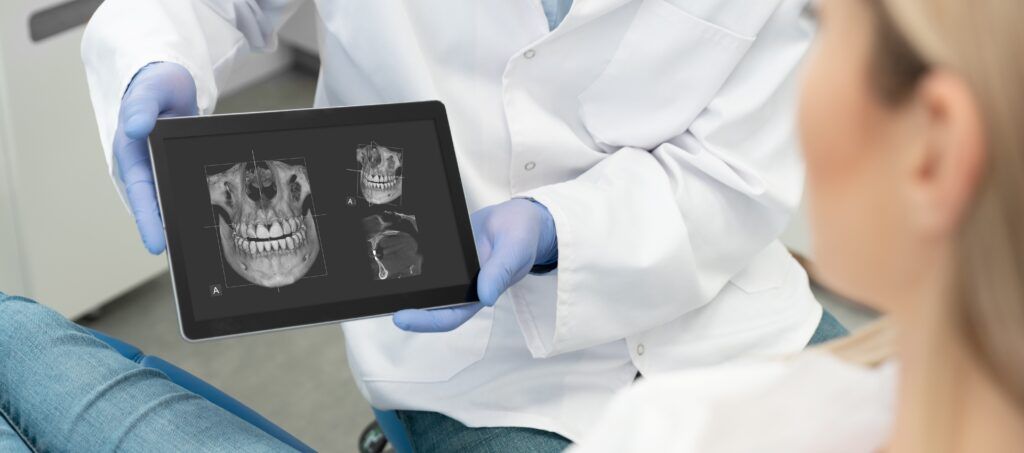
If you are missing one or more teeth, you have three main options: a dental implant, a bridge, or a denture. Each one works. Each one has trade-offs. And the right answer depends on your mouth, your health, your budget, and what you want your next twenty years of eating and smiling to look like.
Here is the honest comparison we walk patients through every week.
Dental implants: the closest thing to a natural tooth
A dental implant is a small titanium post placed in the jawbone, which fuses with the bone over a few months and then supports a custom crown. Because it replaces the root — not just the visible tooth — it is the only option that stops the jawbone from shrinking where the tooth was lost.
- Pros: looks, feels, and chews like a natural tooth; preserves bone; does not touch or compromise neighboring teeth; can last decades with normal home care; no adhesives, no removal at night.
- Cons: highest upfront cost per tooth; requires minor surgery and a few months of healing; needs adequate bone (though bone grafting can usually solve this).
- Best for: anyone in reasonable health who wants the most durable, most natural long-term result — whether replacing one tooth or anchoring a full arch.
We covered pricing in detail in How Much Does a Dental Implant Cost in Wilmington, DE? — including the parts nobody itemizes and how financing typically works.
Dental bridges: fixed, faster, but borrows from the neighbors
A bridge fills a gap by anchoring an artificial tooth to crowns placed on the teeth on either side. It is cemented in place — you do not remove it.
- Pros: fixed and stable; completed in weeks rather than months; no surgery; usually costs less than an implant; a good option when the neighboring teeth already need crowns anyway.
- Cons: the adjacent teeth must be shaved down to support the bridge, even if they are perfectly healthy; the bone under the missing tooth continues to shrink; typical lifespan is roughly 10–15 years before replacement; flossing under it takes technique.
- Best for: patients who cannot or prefer not to have surgery, or whose neighboring teeth already need crown work.
Dentures: the most affordable path, full or partial
Dentures are removable appliances — a partial denture clips around remaining teeth, while a full denture replaces an entire arch.
- Pros: lowest upfront cost; no surgery; can replace many teeth at once; modern dentures look far better than the ones your grandparents had.
- Cons: less chewing power than implants or bridges; can slip or click, especially lower dentures; the jawbone continues to shrink underneath, so they need relining or remaking every few years; removed nightly for cleaning.
- Best for: replacing many missing teeth on a budget, or as an interim step. And the two approaches combine well: a small number of implants can anchor a denture so it snaps firmly into place — dramatically more stability without the cost of replacing every tooth individually.
Side-by-side summary
- Longevity: implants (decades) > bridges (10–15 years) > dentures (5–8 years before relining/remaking).
- Chewing strength: implants > bridges > dentures.
- Bone preservation: only implants preserve the jawbone.
- Upfront cost: dentures < bridges < implants — but over 20 years, an implant is often the cheapest option per year because it rarely needs replacement.
- Time to finished result: dentures and bridges (weeks) < implants (months, including healing).
Why have this conversation with a board-certified implantologist?
Implant dentistry is not a specialty recognized in every state, which means any dentist may legally place implants — training varies enormously. Dr. Sattar A. Syed, DMD, MAGD, DABOI, DICOI is the only dentist in Delaware to hold both a Mastership in the Academy of General Dentistry and Diplomate-level implantology board certifications from both the American Board of Oral Implantology and the International Congress of Oral Implantologists.
That matters for a simple reason: the honest answer is not always an implant. Because we place and restore all three options in-house, the recommendation you get is based on your anatomy and goals — not on which procedure the office happens to offer.
The next step
Bring us your X-rays or let us take new ones, and we will map out all three options with real numbers for your specific case. Call (302) 994-3093 or request a consultation online.
Questions about your smile?
Our Wilmington team is happy to help — give us a call or request a visit online.