
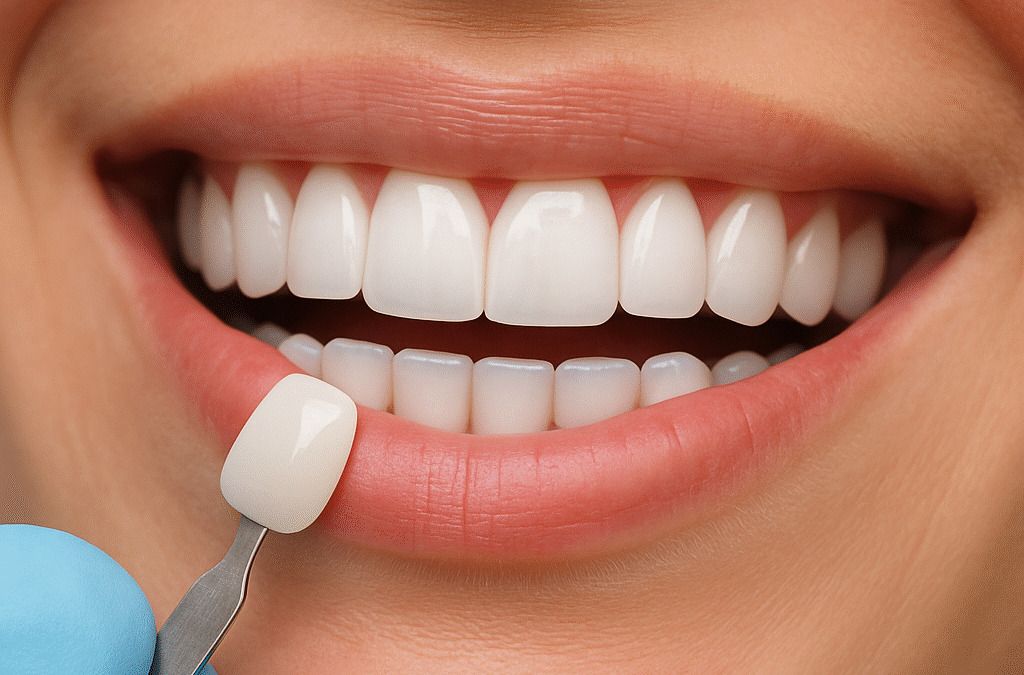
Cosmetic dentistry has come a long way from the bulky-looking veneers of decades past. Today's porcelain veneers are thin, custom-shaded shells that mimic the natural translucency of healthy enamel. They are also remarkably conservative — modern preparations preserve as much of your own tooth structure as possible. At Delaware Star Dental, we hand-design veneers around your face: your lip line, the shape of your other teeth, and the color you'd want to see in family photos. And we never finalize a veneer case without showing you a preview of the finished result first.
What is a Porcelain Veneer?
A porcelain veneer is a thin, custom-fabricated shell of dental-grade ceramic that bonds to the front of a tooth. Think of it like a custom-fitted overlay rather than a replacement — your underlying tooth stays in place. Each veneer is created in a master ceramist's lab from impressions, photographs, and digital scans of your smile. The color, surface texture, and translucency are all customized so the finished veneer looks indistinguishable from a healthy natural tooth, even up close. Most full-smile cases involve six to ten veneers, depending on how wide a person's smile shows.
What Veneers Can Fix
Veneers are versatile because they address the front-facing surface of the tooth, which is where most cosmetic concerns live.
- Chipped, cracked, or worn-down edges
- Deep enamel staining that doesn't respond to professional whitening
- Teeth that look short or uneven in length
- Minor crowding or small gaps where braces aren't necessary
- Tetracycline staining and other intrinsic discoloration
- Small misalignments in front teeth that bother you cosmetically
Porcelain Veneers vs. Composite Veneers
There are two main veneer materials. Porcelain veneers — the option we use for full smile makeovers — are fabricated in a ceramic lab from precise impressions of your teeth. They resist staining for many years, have the most natural light-reflective properties, and typically last a decade or more. Composite veneers are sculpted by the dentist directly on the tooth during a single appointment. They cost less and require less tooth preparation, but they stain more easily and tend to need replacement sooner. For one-tooth touch-ups or quick fixes, composite can be perfect. For a full smile transformation that's meant to last, porcelain is the better long-term investment.
The Veneer Process Step by Step
A full porcelain-veneer case usually takes two main appointments spread over a few weeks.
- Free smile-design consultation — Dr. Syed reviews your smile, listens to what you want to change, and uses photographs and digital imaging to show possible outcomes.
- Treatment plan and color selection — we match shade against your other teeth, skin tone, and lip line so the result looks integrated rather than dramatic.
- Tooth preparation — a very thin layer of enamel is gently shaped from the front of each tooth so the veneer can lie flush. Local anesthesia is used; most patients report little to no discomfort.
- Custom temporaries — you leave the first appointment wearing temporary veneers that approximate the final look, giving you a real-world preview.
- Master ceramist fabrication — your final porcelain veneers are hand-built in the lab, typically over one to two weeks.
- Final fitting and bonding — at your second visit, we check the fit, color, and shape, then bond each veneer permanently to the prepared tooth.
How Long Do Veneers Last?
Porcelain veneers commonly last ten to fifteen years, and well-cared-for cases can last longer. Routine factors that shorten that lifespan are the same ones that damage natural teeth: clenching and grinding (which is treatable with a nightguard), biting hard objects, and inconsistent oral hygiene that lets the gum line recede around the veneer edge. Stain resistance is one of porcelain's strengths — coffee, red wine, and dark berries don't penetrate the ceramic surface the way they can penetrate enamel.
Cost, Insurance, and Financing
Veneer pricing depends on the number of teeth being treated and the complexity of the smile design. Because veneers are usually considered cosmetic by insurance plans, most are not covered. We provide a transparent written quote at your free consultation, with no surprise add-ons. Patients who want to spread payments out can apply for CareCredit financing, or use our in-house savings plan to reduce out-of-pocket costs. Many patients schedule veneers a few teeth at a time rather than all at once — that's perfectly fine and often more comfortable both financially and clinically.